1 Carat Solitaire Diamond Ring Price, Explained by a Maker
By SGJ · · 11 min read
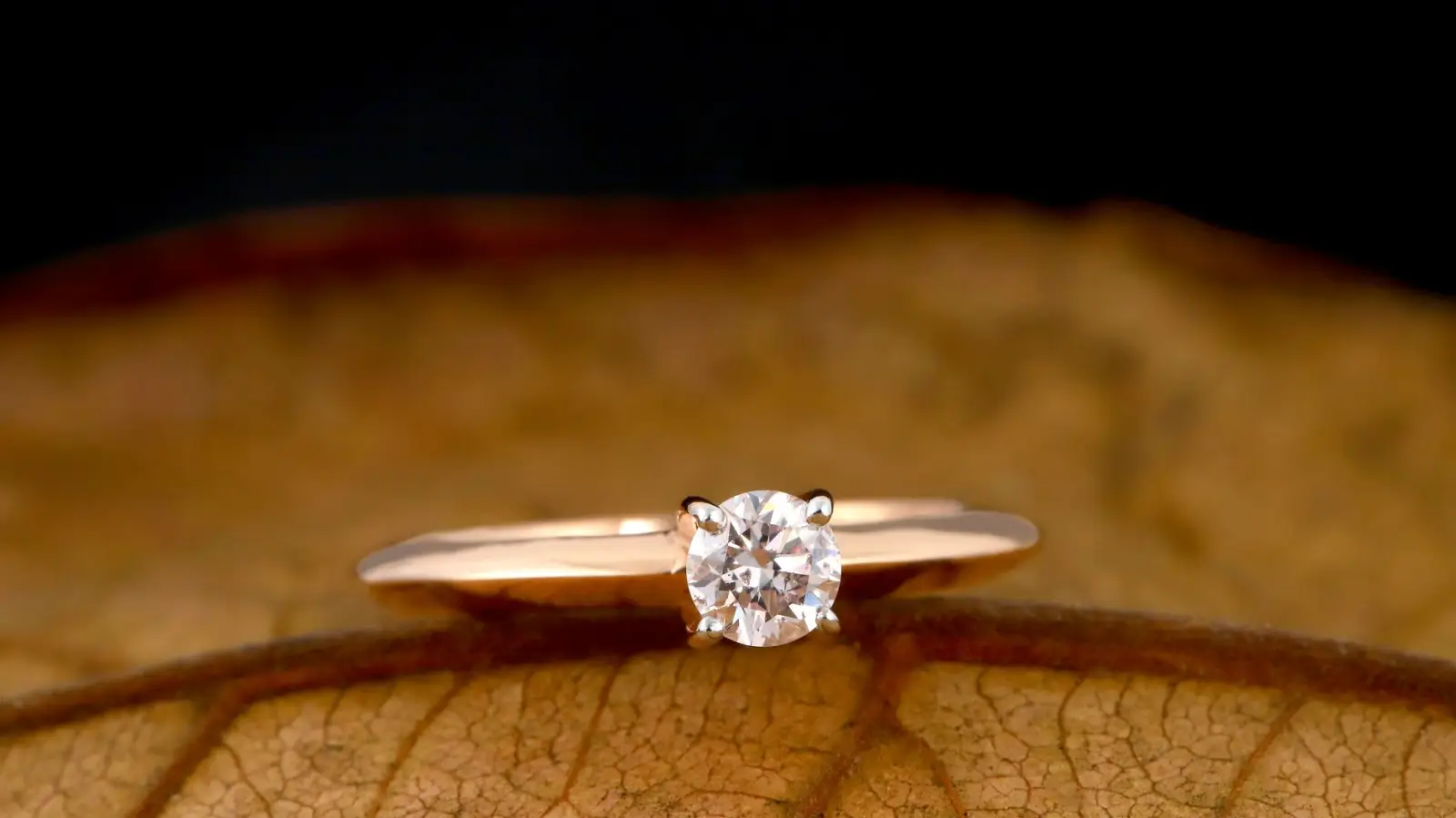
Two rings can both be described as a one-carat solitaire and be separated by a factor of three on the invoice. Nothing dishonest has happened. The 1 carat solitaire diamond ring price is set by four grades, a metal weight, a labour charge and a route to your finger — and "one carat" is only the first of those. A certified one-carat solitaire sits well above our rings-line floor, and everything below explains what decides by how much.
What sets the 1 carat solitaire diamond ring price?
A solitaire is the simplest thing a workshop makes: one stone, one setting, no supporting cast. That simplicity is what makes it the honest test of a jeweller's pricing. Every rupee is attached to something you can name.
The bill has four parts, and only the first is about the diamond's weight:
- The stone — its weight, and the three grades that qualify that weight
- The metal — how many grams of gold or platinum, at what purity, on the day's rate
- The making — the setter's time, which a solitaire spends almost entirely on the one stone
- The route — how many businesses stood between the bench and the counter
The fourth is the one nobody itemises for you, and on a retail solitaire it is frequently the largest single line after the stone itself. Two sellers quoting a wildly different solitaire diamond price for the same specification are usually describing their own supply chains, not the stone.
Why one big stone costs more than several small ones
This is the mechanic underneath every carat question, and it is worth understanding before the round-number trap below.
Diamond prices do not rise in step with weight — they rise faster. A two-carat stone costs considerably more than twice a one-carat of matching grades. The reason is supply: large crystals that are also clean and well-formed are genuinely uncommon, whether they came out of the ground or out of a growth chamber, and cutting one costs yield. A cutter shaping large rough sacrifices a great deal of material to reach good proportions, and every gram lost is priced into what survives.
So the same total weight is cheap when scattered and expensive when concentrated. A ring carrying a full carat spread across a dozen small stones can cost a fraction of a one-carat solitaire, and it is not a lesser piece of work — it is a different product. The solitaire's premium buys concentration, and concentration is the scarce thing.
Why the 1.00 carat mark costs a premium
Because it is a round number, and rough diamonds do not care about round numbers.
A cutter finishing a stone can often choose to land just under a carat or just over it. Landing over keeps more weight and surrenders some freedom to cut for the best proportions. Because buyers search for "one carat" and not "0.94 carat", demand piles up at the round figures and the market pays a step to sit above them. The trade calls these magic sizes: 0.50, 0.75, 1.00, 1.50, 2.00.
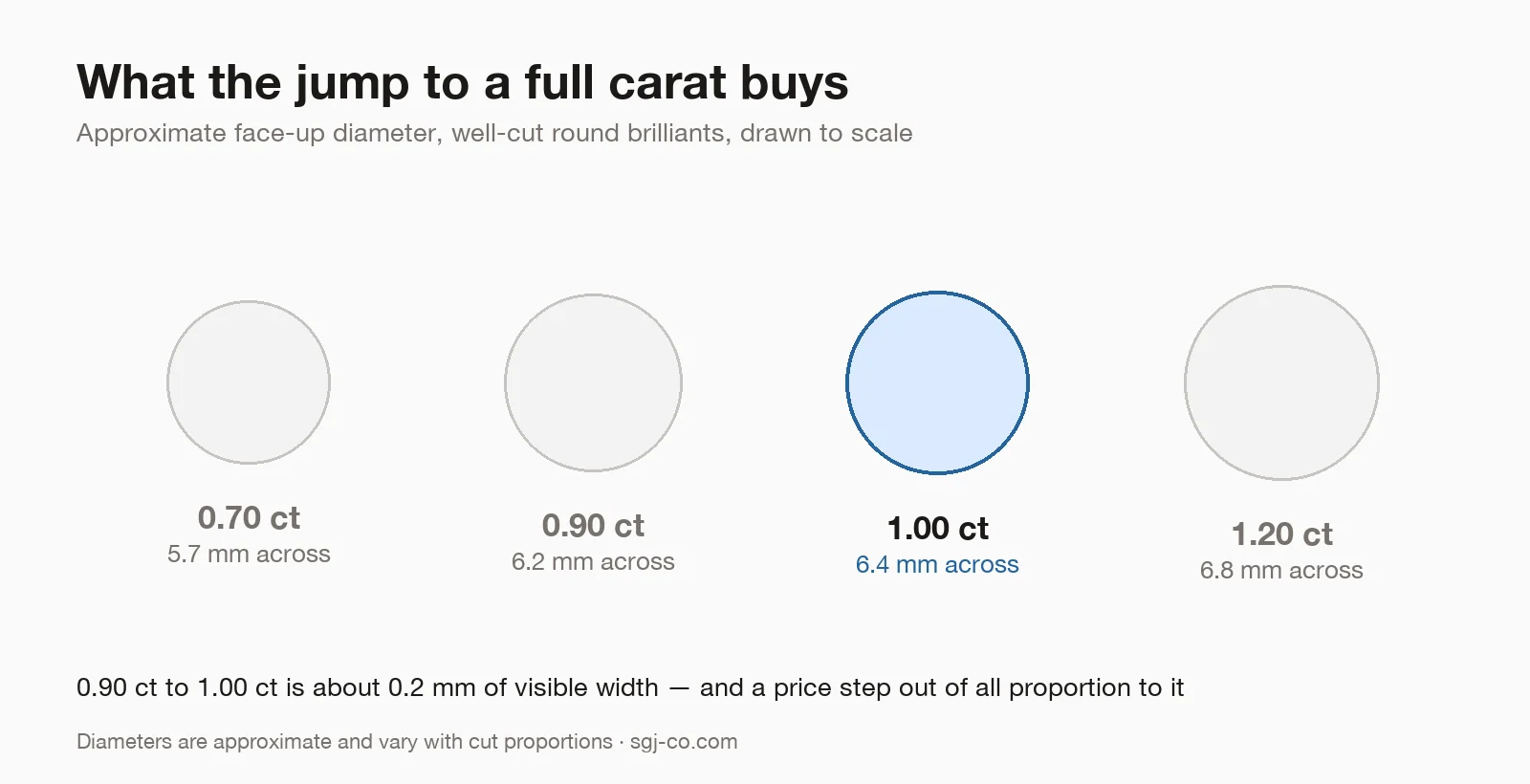
Here is what that step buys in the only currency your eye reads, which is width across the top of the stone. A well-cut one-carat round brilliant measures roughly 6.4 mm across. A 0.90 carat measures roughly 6.2 mm. Two tenths of a millimetre — about the thickness of two sheets of paper — for a price jump that is anything but proportional.
So the most effective saving available on this purchase is to stop insisting on the number. A 0.90 or 0.92 carat stone, well cut, reads as a one-carat ring to everyone who will ever see it.
Buy the full carat anyway if the number itself is the point — if it is going to be said aloud, or written down, or it simply matters to the person receiving it. That is a real reason to spend the money. It is just not a visual one.
Shape moves the number more than most buyers expect
The post so far has quietly assumed a round brilliant, and that assumption is itself one of the biggest levers on the bill.
Round is the most expensive shape per carat, for the same yield reason as above: cutting a round brilliant discards more of the original crystal than cutting almost anything else, and the discarded weight is in the price. Fancy shapes — oval, pear, marquise, emerald, cushion — generally cost less per carat than a round of matching grades.
Elongated shapes also carry their weight differently. An oval or a marquise distributes mass across a longer face, so it looks wider on a finger than a round of identical weight. Which produces a stronger version of this guide's whole argument: if apparent size is what you want, changing shape buys more visible stone per rupee than climbing to the round number does.
The trade-off is that open shapes with long flat facets, emerald and Asscher especially, expose the stone's interior more than a brilliant does — so those shapes ask for a more careful clarity grade. Our diamond clarity chart guide sets out where that line falls.
The three grades that decide the rest
Weight tells you how much diamond. These tell you which one, and on a solitaire they are unusually exposed — there is no surrounding pavé to carry the piece if the centre stone is weak.
Cut is the grade to protect on this shape above all others. It governs how the stone handles light, and a solitaire puts one stone in an open setting under a single spotlight. A poorly cut one-carat looks smaller and flatter than a well-cut 0.90: you would have paid the magic-size premium and then handed the benefit back.
Colour matters more on a solitaire than on a busy piece for the same reason — one uninterrupted stone against one metal, with nothing to distract the eye. The metal decides how much you should care. Against platinum or white gold there is nothing to disguise a warm tint; a yellow-gold setting lends its own warmth to the stone and makes a lower colour grade a sensible economy.
Clarity is the one to buy carefully rather than generously. The useful target is the least expensive grade at which your specific stone shows nothing to an unaided eye, and on a solitaire that judgement should be made on the actual stone or its report plot, never on the letters alone. The VVS guide covers the top of the scale and why we rarely recommend it.
Spend in that order — cut first, then whichever of colour or clarity your setting exposes, then weight. Most retail quotes are built in the reverse order, because weight is the number that sells. The GIA's 4Cs reference defines all four if you want the grading detail.
What else is on the invoice?
The ring around the stone, and it is not a rounding error.
Metal by weight. A solitaire band is light compared with an ornate piece, but it is still grams at that day's rate. For gold, ask for the gram weight and the karat in writing and check the piece carries a BIS hallmark — hallmarking is mandatory for gold jewellery in India and the stamp is your purity guarantee. Platinum is described differently: purity is stated in parts per thousand and stamped Pt950 or Pt900, not in karats. A platinum solitaire usually costs more than the same design in gold, but not because platinum is the dearer metal per gram — it is denser, so the identical ring takes more grams; jewellery platinum runs about 95% pure against 18k gold's 75%; and it is slower and harder on tools at the bench.
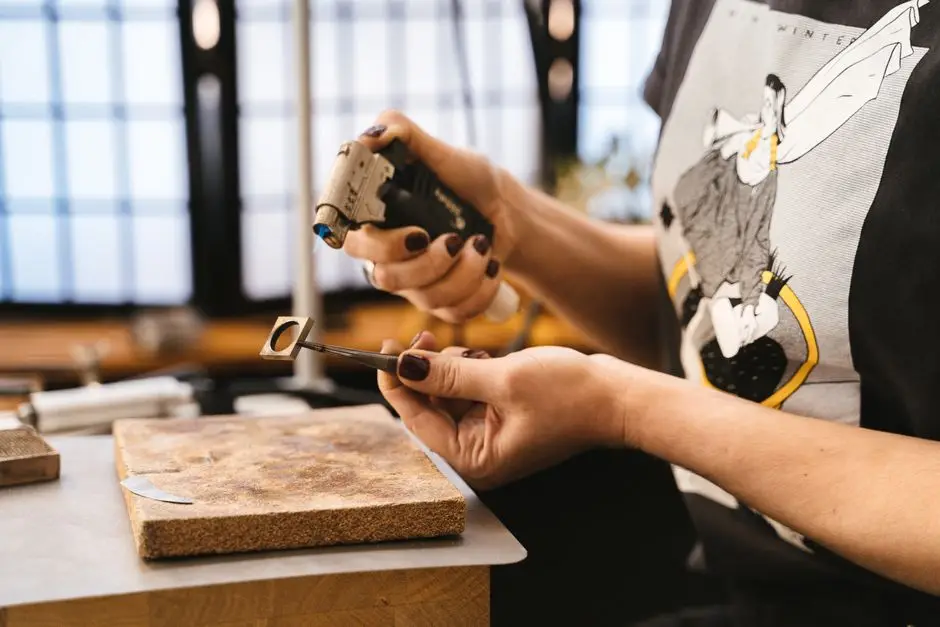
Setting labour. A solitaire concentrates the setter's attention on one stone where a slip is unrecoverable. Slow, skilled work, and it should appear as its own line.
The certificate. An independent lab has examined the stone and put its name to what it found, and its fee rides along with the diamond. That fee buys the only statement in the entire transaction that does not come from someone with an interest in selling you the ring.
Everything else. Showroom rent, distributor margin, inventory financing, commissions. We cut and set our own stones in Mumbai and sell direct, which is why our floor sits where it does at all. Our lab grown diamond price guide follows one stone's invoice through that chain in detail.
Buying a one-carat solitaire lab grown
Same shopping method, materially smaller numbers — spec for spec, lab grown runs up to 60% below the mined equivalent. Everything above still applies: the magic-size premium, the shape economics, the spend-in-this-order rule.
One practical note on paperwork, because it changes how you compare quotes. IGI grades lab grown stones on exactly the scales described here, and most lab grown paper you will meet in India is IGI's. GIA has moved its lab grown reports onto broad descriptive quality categories instead of the letter grades, so a GIA lab grown report will not hand you the same cut/colour/clarity ladder to shop on. Neither approach is wrong; you just cannot compare the two documents line for line. Our lab grown diamond rings page shows the finished work.
What to check before you pay
Five things, any seller, and the first one is the one nobody asks:
- The measurements in millimetres. Ask for the stone's diameter, or length and width. This is the number your eye actually reads and it is the only fair way to compare two stones of different weights or shapes. A seller who has the certificate has the measurements.
- All four grades together. Weight alone is not a specification. A quote naming a carat figure and nothing else has told you almost nothing about the diamond.
- The report number — then look it up with the lab yourself rather than trusting the printout. Our walkthrough of checking a report covers the process and its edge cases on any seller's stone.
- Metal gram weight and purity, stamped and in writing — karat for gold, Pt950 or Pt900 for platinum.
- One comparison quote for the identical specification. Ten minutes of work, and the only way to find out whether the price of a solitaire ring you have been offered is reasonable.
The questions everyone asks
How much should a 1 carat solitaire diamond ring cost?
More than our rings-line floor, and how much more depends on four things: the cut, colour and clarity grades attached to that carat, and the metal around it. No honest seller can name a single figure without those, and one who does is pricing weight rather than a diamond. Ask for the same itemised breakdown from everyone and the comparison becomes trivial.
Is a 1 carat solitaire worth it?
It is worth it if the number matters to you, and not otherwise. A well-cut 0.90 carat is visually indistinguishable from a one-carat at any normal distance, and the saving buys a materially better cut grade — or a longer shape that looks wider than either. Buy the round number for what it means, not for what it looks like.
Does the solitaire setting cost more than other settings?
Usually less in materials and more in care. There is no halo or pavé to buy and set, so metal and stone counts are low, but the single stone carries the whole design and the setting work is exacting. Expect what you save on the setting to reappear on the stone, because the cost of solitaire diamonds of a given weight is where this design concentrates its money.
Why is a 1 carat solitaire more expensive than a ring with a carat of small stones?
Because concentration is the scarce thing. Large, clean, well-formed crystals are uncommon and cutting them wastes more material, so price per carat climbs steeply with size. The two rings carry the same total weight and are entirely different products — which is worth knowing before you assume the cheaper one is lower quality.
Is a diamond solitaire a good investment?
No, and we would rather say so before you buy than after. Resale is usually well below purchase price, whatever the stone's origin or grades. A solitaire earns its money by being worn for forty years, which is a good reason to buy one and a completely different one.
Send us the spec, not just the budget
Tell us the weight, the three grades, the millimetres and the metal you have been quoted — WhatsApp opens from the homepage — and we will price the same specification against the certificate and show you plainly where the quote you are holding is spending your money. Every stone we sell is certified by IGI, GIA or HRD. Bharat Diamond Bourse and GJEPC members, shipping across India, Mumbai visits by appointment. The rest of the guides are on the guides index.