Check IGI Report: How to Verify a Diamond Certificate
By SGJ · · 19 min read
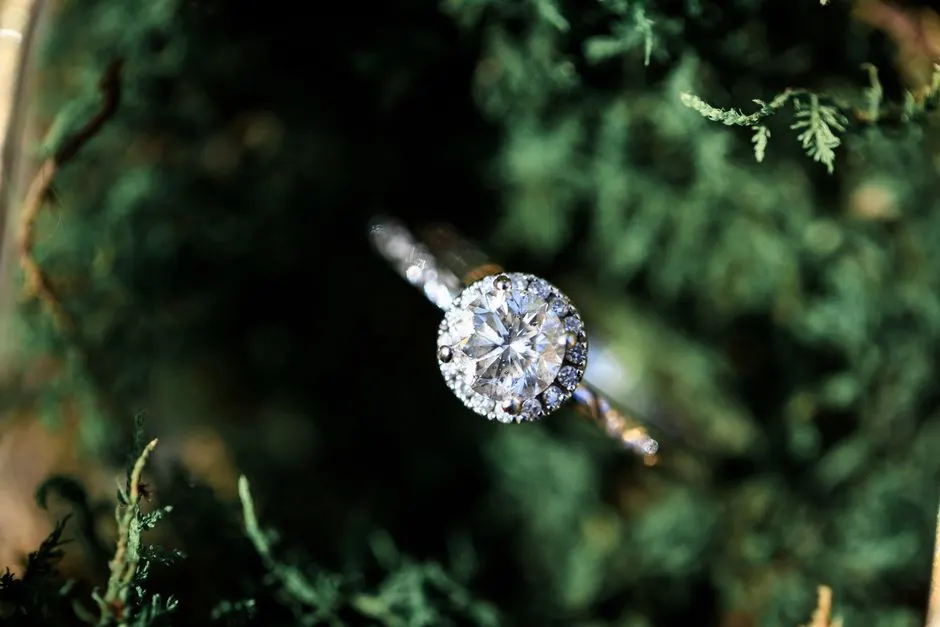
Every claim in a diamond listing is marketing except one. The certificate is the only sentence a third party has to stand behind — and you can check IGI report numbers against the lab's own database, free, in under a minute. Most buyers never do.
That is the whole pitch for this guide. Below: where the lookup lives, what has to match between the report and the stone in front of you, who actually owns the laboratory writing the grades, how the same check works on GIA and HRD paper, and what to do when something doesn't line up.
How do you check IGI report numbers?
Three steps, no account, no fee.
- Find the report number. It is printed on the certificate, and on many stones it is also laser-inscribed on the girdle — the thin edge between the top and bottom of the diamond. A jeweller's loupe reads it; any seller with nothing to hide will put the stone under magnification for you.
- Open IGI's report verification tool — the IGI certificate lookup — and enter the number.
- Compare. The database returns the record IGI holds for that number — shape, carat weight, colour, clarity, cut, and whether the stone is lab grown or mined. That record has to agree with the paper in your hand and with the stone in front of you.
The tools exist because being checkable is the labs' entire product. Use them the way they are meant to be used: before the money moves, not after.
You do not need the stone in hand to run the check. A photo of the certificate — or just the number typed into a WhatsApp message — is enough to pull the lab's record. Run it before you visit, not at the counter with someone watching you type.
What should match between the report and the stone?
Everything the report measures. In practice, check these five:
- Carat weight, to the second decimal.
- Shape and measurements — a round of the stated millimetre spread, not roughly that.
- Colour and clarity grades, exactly as printed.
- Cut grade, where the report carries one.
- Origin — a lab grown stone says so on its face; a natural stone gets a different report type rather than a line declaring it natural.
Then the physical tie-breaker: if the girdle is inscribed, the inscription must match the report number. The stone is the original document; the paper is a copy. When a seller swaps a certificate between stones — the classic trick — the girdle is what gives it away.
One note for finished jewellery: a grading report covers one stone. A pair of earrings should come with two report numbers, or with a jewellery report covering the finished piece. Both are legitimate — but run an IGI certificate check on whichever you are actually holding, and know which one it is before you compare prices against another quote.
What does the report actually tell you?
What the stone is. Not what it is worth.
An IGI report carries a graded record of the four Cs — carat, colour, clarity, cut — plus measurements and origin. It is the part of a listing you can verify from home, which is why our position is blunt: certification is the only verifiable claim in any listing. Everything else a seller says about a stone is marketing. It is also why every stone we sell carries IGI, GIA or HRD paper, at every size and every price point we make.
Know what the report does not tell you. It does not grade the mounting, the finishing, or whether a pair of stones match each other. It does not say whether the price is fair — a genuine certificate travels with overpriced stones every day. The report answers "is this stone what the seller says it is." The rest of the homework is comparing quotes on the same spec, which the report makes possible.
What IGI is, and who owns it
The International Gemological Institute opened in Antwerp in 1975 and now runs laboratories in ten countries, including grading labs in Mumbai and Surat. It grades natural diamonds, laboratory-grown diamonds, coloured stones and finished jewellery, on the same four-C scales the trade has used for decades.
The ownership is the part worth knowing. In May 2023 IGI was bought by Blackstone, the private equity firm, from the founding Lorie family and Fosun's Shanghai Yuyuan. GIA, by contrast, has been a non-profit since 1931.
Does that make IGI less trustworthy?
Not in the way the framing suggests. A grading report is not worth anything because of the lab's tax status; it is worth something because a third party wrote it down and publishes a database you can check it against, without asking the seller's permission. IGI publishes one. So does GIA. So does HRD.
It is also worth knowing that GIA's laboratory arm has been a substantial revenue business inside the non-profit for years. The clean line between charitable institute and commercial lab is blurrier than the labels imply, in both directions.
Where ownership does bite is on incentives — a lab that grades for a fee has a customer, and the customer submits the stones. That argument applies to every commercial laboratory in the trade, and the defence against it is the same everywhere: the grades are published, the database is public, and a lab that drifts gets found out by the next lab that regrades the stone.
Does an IGI certified diamond get an easier grade?
You will read constantly that IGI grades more generously than GIA. The published evidence does not support it, which is worth saying because almost nobody does.
The comparisons that exist are small, and they do not point where the rumour points. A retrospective of twenty-nine dual-certified stones found IGI's colour grading stricter than GIA's more often than looser — twelve stricter, seven the other way, ten identical — with clarity matching on twenty of the twenty-nine. Rapaport's own grading survey placed IGI second of the six laboratories it tested. IGI has published a direct rebuttal since 2020. And GIA has never made the accusation: it argued its October 2025 decision on entirely different ground, that lab grown stones now cluster in too narrow a band for the old scale to say anything useful.
So treat "IGI grades soft" as trade folklore until somebody publishes a blind study. The narrower truth underneath it still matters: two laboratories reading the same stone can land a step apart, in either direction. A step is invisible on a hand — the clarity ladder shows where that line falls — and very visible on a price.
Which produces the only rule that protects you here: compare quotes graded by the same laboratory, or do not compare them. A quote on IGI paper against one on GIA paper is two different measurements, and the gap between them is not a saving.
Which IGI report you are holding
IGI does not issue one document. It issues several, and buyers routinely mistake one for another.
- A diamond report — what people mean by an IGI certified diamond — covers one loose stone: shape, measurements, carat, colour, clarity, cut where it is graded, polish, symmetry, fluorescence, and whether the stone is laboratory-grown or natural.
- A jewellery report covers a finished piece. It describes the setting and the stones in it, and it is not a grading report for any single stone.
- On many lab grown reports, IGI also states the growth method — CVD or HPHT — which is worth knowing if you have a view on the two.
That distinction matters most when you are buying something already made. A pair of studs sold with "IGI certified" on the tag might carry two stone reports, or one jewellery report, and those are not the same promise. Ask which.
How do you run a GIA report check?
Same idea, different database — and one extra field. GIA Report Check wants two things, which is where most people stall: the report number and the carat weight, both printed on the certificate.
- Find the number and the weight. Both sit at the top of the report, beside the issue date. Older reports and the small-stone Diamond Dossier carry shorter numbers than the ten digits on a current one. Length is age, not fraud.
- Open the lookup. Type the number exactly as printed, with no spaces, and the carat weight exactly as GIA wrote it — 1.01 means 1.01.
- Compare. What comes back is GIA's own record. Your certificate is a copy of it; the stone is what both are describing.
HRD Antwerp publishes a lookup for its own reports on the same principle. Whichever lab graded it, the move is identical: go around the seller, straight to the database. A printout can be edited. The lab's record cannot — not by the seller, anyway.
If a certificate comes from a lab you have never heard of and cannot look up, treat it as decoration. IGI, GIA and HRD are the ones with public databases and reputations priced into every stone they grade.
Read a GIA report in GIA's own order
A GIA report prints its fields in a fixed order. Check them in that order and you stop hunting around the page.
- Shape and cutting style, then measurements in millimetres. A round should be the stated spread, not near it.
- Carat weight, printed to the hundredth. GIA does not round up to a nicer number.
- Colour, clarity, cut — on a report that still carries them. See below if the stone is lab grown.
- Polish, symmetry, fluorescence.
- Inscription, near the bottom: the field almost nobody reads.
A certificate can be walked from one stone to another in under a minute, which makes the inscription the stronger check. Not a perfect one: GIA has published lab notes on counterfeit girdle inscriptions, including lab grown stones carrying a real natural stone's number. The inscription settles an argument between paper and stone. The database settles an argument with the inscription.
One limit worth knowing. Every GIA lab grown service is for loose stones, so a lab grown diamond already set into a ring cannot be submitted at all. When a finished piece comes with GIA paper, the stone was graded before it was set — which makes matching paper to stone your job rather than the lab's.
GIA stopped grading lab grown diamonds on the four Cs in October 2025
On 30 September 2025 GIA issued its last four-Cs report for a lab grown diamond in the colourless-to-near-colourless range. From 1 October it issues a Laboratory-Grown Diamond Quality Assessment, and it sorts each stone into one of two boxes.
Premium needs all of it: D colour, VVS clarity or better, excellent polish and symmetry, and an excellent cut grade on round brilliants.
Standard is the floor: E to J colour, VS clarity, very good polish and symmetry — good, on fancy shapes — and a very good cut on round brilliants. A stone that clears neither bar is not assessed at all.
Three limits: loose stones only, colourless and near-colourless only, 0.15 carats and up. A lab grown coloured diamond still gets a full report with a plotted clarity diagram, so a pink or blue stone is unaffected.
Now look again at what happened to the middle. Standard runs from an E colour VVS1 — a stone that misses Premium on colour alone — all the way down to a J colour VS2. Those are many distinct steps apart on the colour and clarity scales, and the trade has always priced them steps apart. On the new paper they are one word.
Our position, and it is not a comfortable one: since October, a GIA lab grown diamond report is a proof-of-origin document rather than a grading document. Two Standard stones can differ by more than the whole setting budget. So if a seller quotes off a new assessment, ask for the grades in writing, or ask to see the stone on IGI paper. HRD used to be the other answer. It left loose lab grown certification in 2026, so on a loose stone IGI now stands alone.
None of this changed the stones. It changed what the paper is worth, and a buyer with less to go on is a less confident buyer, which eventually shows up in the price.
What each lab's paper carries now
| On a white lab grown stone | IGI | GIA |
|---|---|---|
| Colour, clarity, cut | Graded separately on the letter scales, with a cut grade on nine shapes | One word standing in for five inputs: clarity, colour, polish, symmetry, cut |
| Measurements | Printed | Dropped from the assessment |
| A stone missing any minimum | Graded normally | No assessment, and a fee anyway |
| Growth method | Stated, CVD or HPHT | Not distinguished |
And where GIA is the stronger document: on lab grown coloured stones it still issues a full report with a plotted clarity diagram, and on natural stones it remains the older name and the one the trade pays a premium for.
One thing worth being precise about, because most write-ups get it wrong: GIA's lab grown assessment carries no cut grade at all. Cut is folded into the single descriptor with everything else. GIA does add fancy-shape cut grades in 2027 — marquise, oval and pear — though it has not said whether that extends to lab grown stones.
The nine IGI grades for cut are princess, oval, pear, marquise, heart, emerald, square emerald, square cushion and cut-cornered square. Note what that list leaves out: the elongated versions. A rectangular cushion or a stretched radiant gets no cut grade from either laboratory.
Smaller laboratories do still grade the four Cs on lab grown stones — GCAL, GSI, and Mumbai's own SGL among them — so "IGI or nothing" is only true of the big three.
How do you tell a real report from a fake one?
Run the number. The database beats every security feature on the page, because a printout can be forged and a database entry cannot be forged from outside the laboratory.
GIA builds three defences into the document: a hologram, a security screen and microprint lines. The hologram shifts when tilted. The microprint reads as a solid rule until a loupe turns it into text. Reports have also carried a QR code for years, which reaches the same record as typing the number.
Use the paper to raise suspicion and the lookup to settle it. Never the other way round.
No report number? Read the girdle.
Often the number is on the stone too, inscribed on the girdle — the thin band around the widest part. GIA sets it to be readable at 10x, so a loupe will usually do and a microscope makes it easy. Any manufacturer has one on the bench. Ask to look down the eyepiece; it takes two minutes, and wanting to is not rude.
A bare girdle on its own proves nothing, because inscription is standard on some services and an optional extra on others. A bare girdle and no paper is the problem. That is not automatically a bad stone. It is an unverifiable one, and the price should say so.
What if the report doesn't check out?
Walk. Not negotiate — walk.
A number the database cannot find, grades that disagree with the paper, or an inscription that doesn't match the certificate: any one of these ends the conversation. A mismatch is not a discount opportunity, because the thing you would be negotiating for is a stone you now know nothing about.
Three honest exceptions. A reissued report or a retyped listing can put one digit wrong — a seller who immediately produces the correct number has made a typo. An old report can lack a field rather than contradict one: GIA only introduced its round-brilliant cut grade in 2006, so a report older than that has no cut grade because none existed, and fancy shapes still get none at any age. And a set stone will not match a report on measurements the setting now hides — that is physics, not fraud. What is still visible has to agree; the rest you take on the paper.
A seller who will not hand over the number at all has told you something more useful than any grade: get the report number before you get attached, the same way you would check the price mechanics before falling for a stone.
When we tell people not to pay for a certificate
Small stones. If a ring carries a centre stone and a halo of melee, the melee is not individually certified anywhere in the trade, and it should not be — a per-stone report on a two-point diamond costs more than the diamond. Anyone offering to certify every stone in a pavé band is selling you paperwork.
The same goes for a stone already set. Loose-stone reports are for loose stones; once it is in a mount, no laboratory is regrading it without the setter taking it out first, and that is a cost with no buyer.
Certification earns its money on the centre stone. Ask for it there, and do not let anybody sell you more of it than that.
What to ask for
- Name the laboratory before you talk price. For a loose white lab grown stone in 2026, ask for IGI. For a natural stone, IGI, GIA and HRD are all real answers.
- Ask for the report number, not a photo of the report. The number is what the database answers to.
- Check the report type, not for a word. A lab grown stone's report says so on its face. A natural stone's report is simply a different document — it does not usually carry a line declaring the stone natural, so do not go hunting for one. If nothing on the paper names an origin either way, that is your question.
- On a fancy shape, find out whether cut was graded. If it was, that is the most useful line on the page. If not, you are judging proportion from millimetres.
- Get a second quote on identical paper. Same laboratory, same grades, same weight.
The questions we get asked most
Is a report check free?
Yes, at all three laboratories. No account and no payment. Being checkable from outside is what a grading laboratory sells.
Is a certificate check the same thing as a report check?
Yes. The laboratories call the document a report; the trade has said certificate for decades. Both names describe the same lookup.
Is my GIA certificate real if the number is only seven digits?
Probably. Digit count has changed across services and across decades, and the Diamond Dossier has always run shorter than the full grading report. Look it up before you worry about it.
Does GIA still grade lab grown diamonds?
It assesses them. Since October 2025 a lab grown stone in the colourless-to-near-colourless range gets Premium or Standard instead of individual grades, while coloured lab grown stones still get a full report. IGI, the lab behind roughly half of India's diamond certification, has not made the same change.
Is IGI certification reliable?
Yes. IGI grades to the same four-C scales as the other major laboratories and publishes a database anybody can check a report number against. Reliability and strictness are separate questions — a laboratory can be entirely reliable and still grade half a step differently from its neighbour.
Is an IGI certified diamond worth less than a GIA one?
On a natural stone the trade does pay a premium for GIA paper, which is a market preference rather than a statement about the stone. On a lab grown stone the comparison has largely stopped being possible, because GIA no longer issues the grades you would be comparing.
Does IGI grade natural diamonds too?
Yes, and always has. IGI is best known for lab grown work because it built grading parameters for those stones early, but natural stones go on the same scales. The laboratory is not the origin.
Ask us for the number first
The useful thing about all three of these laboratories is the same thing: they publish, so you do not have to believe anybody, including us.
This is an awkward guide for us to write. We grade through IGI, GIA and HRD, and on a white lab grown stone GIA paper now tells a buyer less than IGI paper does. We are not going to pretend otherwise to protect a laboratory we use and respect. Two more notes from the bench while we are busy being unhelpful to ourselves: GIA's Indian laboratory sits in Bandra Kurla Complex, the same Mumbai district as the Bharat Diamond Bourse we belong to, so GIA paper on an Indian stone is ordinary rather than exotic. And if the ring is already made and the report is already in the box, nobody needs to sell you a new one. Us included.
So do to us what this guide describes. Message us on WhatsApp about a piece you are weighing up, ask which laboratory it is graded by, and ask for the number once a stone is allocated to it. Then look it up with us out of the room.
Both lines come off the same Mumbai bench, and we hold Bharat Diamond Bourse and GJEPC membership. We deliver across India; the showroom runs by appointment. Tell us what you are looking for, or see what comes off the bench in lab grown diamond rings and diamond earrings. The rest of our guides live on the guides index.