VVS Clarity Diamonds: What the Premium Actually Buys
By SGJ · · 7 min read
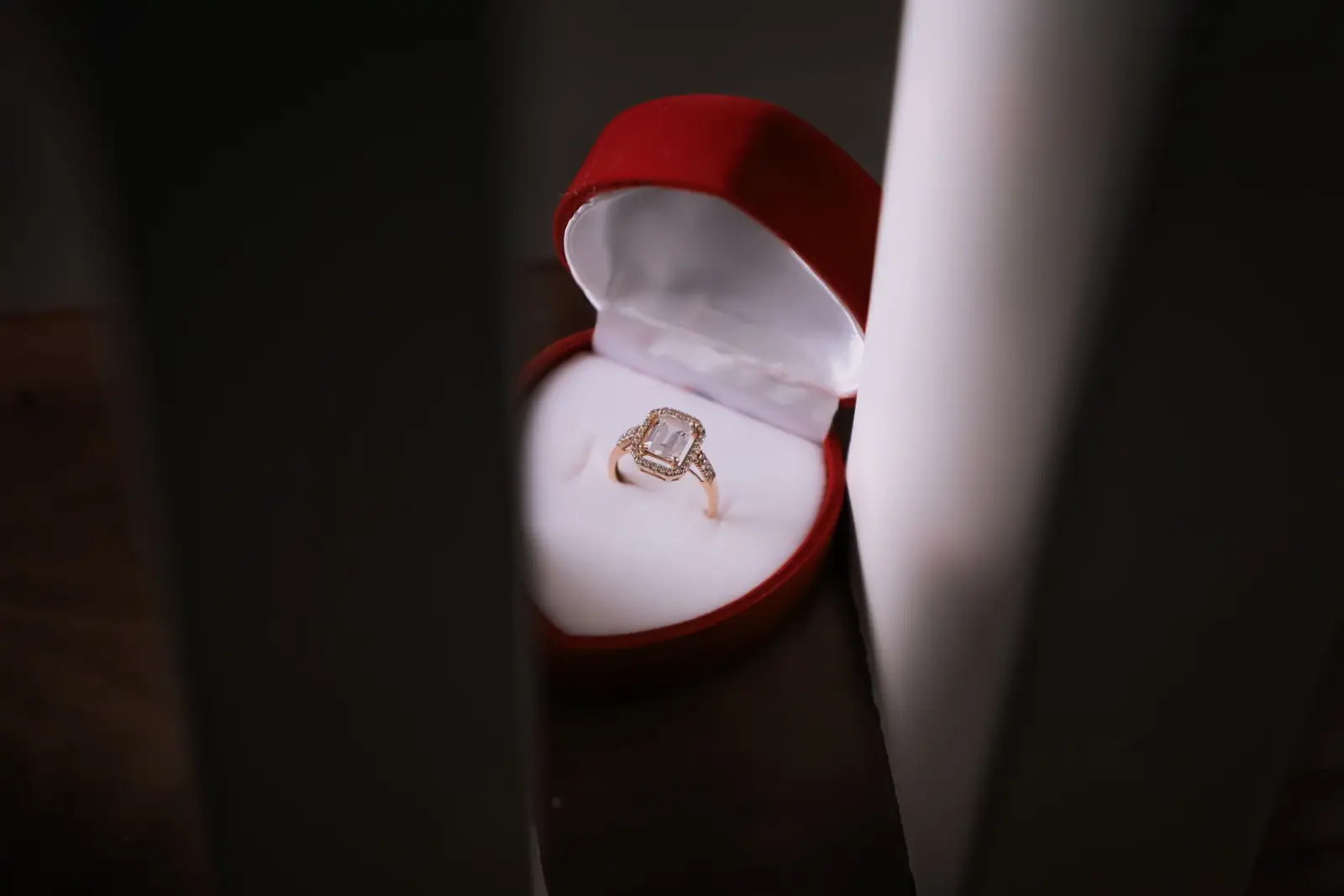
Somebody spent an afternoon with a microscope so that a line on your certificate could read VVS. That is not a complaint — it is the most useful thing to understand before you pay for the grade. VVS clarity diamonds sit two rungs below the top of the scale, holding inclusions that a professional needs patience to locate at ten-times magnification, and nobody has ever spotted one across a dinner table. This guide covers what VVS1 and VVS2 actually mean, why the premium exists, and the specific cases where we would tell you to spend the money somewhere else.
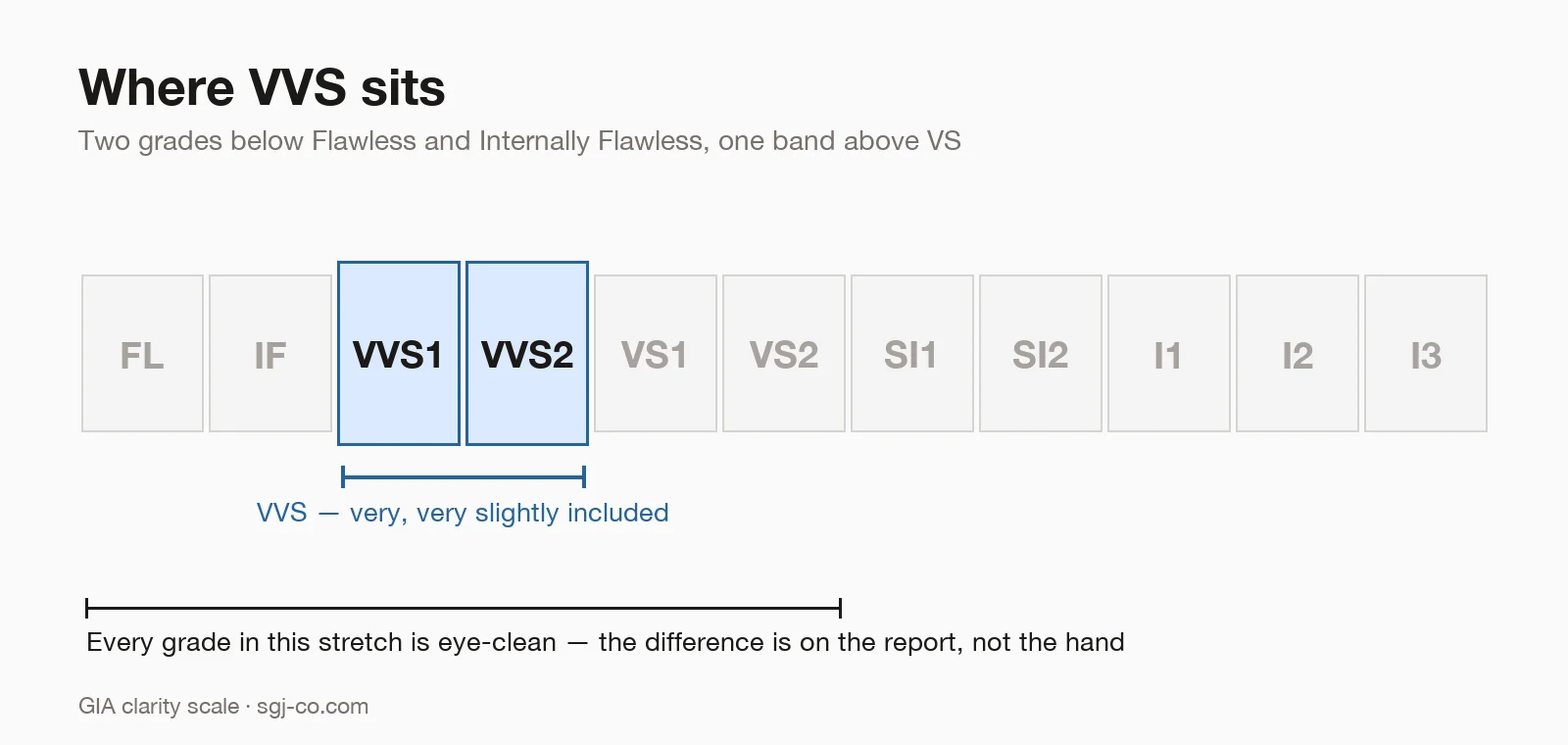
What does VVS mean on a diamond report?
Very, very slightly included — the two grades directly beneath Flawless and Internally Flawless on the GIA's clarity scale, and one band above VS. The full ladder, rung by rung, is in our diamond clarity chart guide; what matters here is that VVS sits deep inside the stretch of the scale where every stone reads clean to an unaided eye.
The features earning a stone that grade are the residue of how crystals form: a pinpoint, a wisp of cloud, a trace of internal graining. On the report's plot they often amount to a single marked symbol. The grade is a record of how little there was to record.
VVS1 vs VVS2: what separates them?
Where the inclusion can be seen from, not how much of it there is. A VVS1 stone's features are typically approachable only through the pavilion — the underside, below the girdle. A VVS2's can be picked up looking straight down through the table, still under magnification, still slowly.
That distinction is a grading-room fact with a price attached. VVS1 costs more than VVS2, and no wearer, owner or admirer has ever perceived the difference. If both are in front of you, let cut settle it: a sharply cut VVS2 outperforms a sleepy VVS1 in the only test that runs daily, which is somebody looking at your hand.
The report is where the sub-grade earns its keep. Plots differ stone to stone, and a VVS2 whose lone pinpoint sits under a facet junction, or wherever the setting will eventually cover, is functionally the higher grade without the higher invoice. That is an argument for reading the plot, not for trusting the letters.
Why does VVS cost more than VS?
Scarcity, and it is real scarcity. Crystals that clean are uncommon out of the ground, and a growth chamber cannot be instructed to produce one either — you take what forms. Every rung up the clarity ladder narrows the supply, and narrow supply carries a price. Nobody is inventing the premium.
What the premium does not carry is a visible improvement. Between a VS stone and a VVS stone of matched cut, colour and weight, the money buys a stronger document and an identical appearance.
Keep walking down the ladder and the same logic holds for a while longer. GH SI is the band most Indian retail quotes by default, and the interesting thing about it is that it is not one grade at all — it is four, sold under one label.
Anyone quoting you a vvs clarity diamond price is also quoting carat, cut and colour in the same breath, and carat moves a bill hardest of all — which is why a single headline figure for "a VVS diamond" would be fiction. Ask for the four grades together or the quote means nothing.
What you can do in a minute is confirm the grade is real. Run the report number through IGI's lookup and compare it against the printout; our walkthrough of checking a report covers the process on any seller's stone, not only ours.
Are VVS clarity diamonds worth it?
Sometimes, and the sometimes is specific. This is how we sort it at the counter:
- Worth it: step cuts. Emerald and Asscher stones have broad, unbroken facets and very little sparkle to distract the eye, so whatever is inside has fewer places to hide. On a large step cut, a high clarity grade earns its money.
- Worth it: large stones. Scale magnifies everything, inclusions included. A grade that vanishes at half a carat can announce itself at three, so the threshold worth paying for rises as the stone grows.
- Worth it: when the certificate is part of the gift. Some pieces are bought as much for the document as the diamond — an anniversary stone, something meant to be handed on with its paperwork. Buying the grade for its own sake is a legitimate reason to buy it.
- Not worth it: brilliant cuts around a carat or under. A well-chosen VS is already invisible-clean at that size, and the money released by dropping a band does visible work in the cut grade instead.
We also tell people the thing that occasionally ends a sale: a diamond is not an investment. Resale is usually well below purchase price, whatever the origin and whatever the clarity line says. Whatever the ring costs, the right reason to buy one is the hand it will sit on.
What about a lab grown VVS diamond?
Identical grading, more attainable stones. A controlled chamber produces high-clarity crystals more often than the ground does, without promising them, and IGI assesses what comes out using the scale described above.
The consequence is a budget one. A lab grown vvs diamond reaches buyers for whom mined VVS was never a real option: spec for spec, lab grown runs up to 60% less than mined, and the whole clarity ladder descends with it. Climbing to VVS stops being a display of budget and becomes a straightforward question of what you want. Our lab grown diamond price guide itemises the rest of the bill, and the lab grown diamond rings page shows the finished work.
The questions everyone asks
Is VVS clarity good?
Yes, and by a comfortable margin — it is the third band from the top, beneath only Internally Flawless and Flawless, and every stone in it is eye-clean. The sharper question is whether the money is buying anything you can see, and on a typical brilliant cut it is not.
Can you tell a VVS diamond from a VS diamond by eye?
Almost never. Both read clean at any normal viewing distance, and the difference lives inside the loupe. The exception is the one worth knowing: in a large step cut, a VS inclusion can occasionally surface to the naked eye, which is exactly where paying up for VVS makes sense.
Which is better for an engagement ring, VVS1 or VVS2?
VVS2, for most budgets. The saving is real, the visual difference is not, and the money does more in the cut grade or the carat weight. Go to VVS1 only if the certificate itself is part of what you are giving.
Does a VVS diamond pass a diamond tester?
Clarity has nothing to do with it — testers read material, not grades, so every VVS stone passes exactly as any other diamond does. The tester quirks worth knowing are about origin rather than clarity, and our CVD diamond guide covers them.
Why do song lyrics mention VVS diamonds?
Because the grade turned into shorthand for the expensive end of the scale, and it scans well. The scale being referenced is the real one, and any particular piece either has the report to back the claim or does not.
Bring us the spec, we will bring the loupe
If you are weighing a VVS stone against a VS at the same budget, send both specifications over WhatsApp — the chat opens from the homepage — and we will price the difference honestly, certificate against certificate. Every stone we sell is certified by IGI, GIA or HRD. The workshop holds Bharat Diamond Bourse and GJEPC memberships, ships across India, and opens for Mumbai visits by appointment. The guides index has the rest.