Diamond Earrings Price: What You Actually Pay in India
By SGJ · · 9 min read
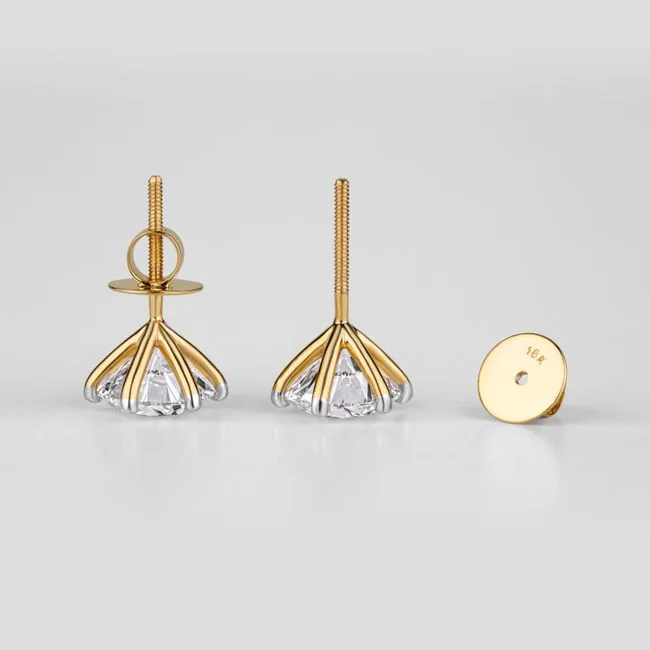
The price of a pair of diamond earrings is mostly not about the diamonds. Pairs that look identical in photos sell a few thousand rupees apart — sometimes a few lakhs apart — and the spread is the supply chain, not the stones.
The short answer first, since that is what you searched for: there is no single diamond earrings price in India, and any listing that shows you one is pricing metal by weight and hoping you do not ask about the stones. A certified pair from our Mumbai workshop is quoted on the spec you choose, natural or lab grown, every stone IGI, GIA or HRD certified. Both lines are cut and set on the same bench; what separates them on the invoice is production cost, not craft, and lab grown runs up to 60% below the mined equivalent. The rest of this guide is the machine from the inside — the four dials that set the number, and where the money hides in a typical quote.
What actually sets a diamond earrings price?
Four dials, in order of force:
The stones. Carat weight leads, and it compounds: price-per-carat climbs as stones get bigger, because larger rough is rarer and harder to cut well — one big stone costs more than the same weight split across small ones. Then cut, colour and clarity, which decide how alive the stones look. Earrings are more forgiving than rings here: they sit a conversation away from anyone's eyes, not under them.
The metal. Gold weight and karat move the price with the gold rate. A heavier setting in higher-karat gold can add more to the bill than a small upgrade in stone quality — worth knowing before you pay for weight you'll never notice on the ear. Karat is a hardness choice as much as a price line: settings usually run 18k or 14k because the harder alloy holds claws better. Purer, softer gold is for chains, not for gripping stones.
The making. Setting labour, finishing, certification. The honest part of every quote.
The route to you. The dial nobody itemises — and the subject of the section most price guides skip.
How does carat weight change the cost of diamond earrings?
Faster than any other dial, and not in a straight line.
Price-per-carat climbs as stones get bigger, because large, clean rough is the scarce thing. One half-carat stone costs more than five stones of a tenth-carat each at the same grades, and the gap widens every step up the scale. The cost of diamond earrings is set by per-stone weight first; the total on the tag comes second.
That distinction is the pair trap. Earrings are usually quoted by the pair's total — "1 carat earrings" generally means half a carat per ear, and two half-carat stones cost far less than two full-carat ones. Neither quote is dishonest. But compare a total-weight quote against a per-stone quote and you are comparing two different pairs. Ask for the per-stone weight, every time.
Pairs also carry a cost no ring ever sees: matching. The two stones have to agree — weight, colour, cut, the way they return light — because they will spend their lives being compared to each other from a foot away. Sorting a matched pair out of many candidates takes real time at the bench, so a matched pair costs more than two odd stones with the same paper grades.
One way to spend less without seeing less: buy just under the round numbers. Demand crowds at the half-carat and one-carat marks, and price steps up with it. A pair sitting just below the mark wears the same and skips the step.
How much do real diamond earrings cost in India?
We can only stand behind our own numbers — every other figure on the internet is someone else's markup, and we quote ours on the spec in front of us. A 1 carat solitaire earrings price concentrates the budget into two large stones, and larger rough is rarer — so if the look you want is one clean stone per ear, that is where the money goes.
The honest way to read any real diamond earrings price: ask what the stones weigh, what the certificate says, what the gold weighs — then compare quotes on those three lines, not on the photos.
Insist on seeing the three lines separately. The gold rate is public, and the certificate can be checked against the lab's own database — which leaves the making charge as the only line that needs judgment. Making charges vary between honest workshops too; hand-setting takes longer than casting. A quote that arrives as one folded number is not necessarily wrong. It is just unfalsifiable, and unfalsifiable is where margins live.
And a when-not-to-buy, since price guides never include one: if you are buying earrings hoping they hold resale value, don't. Diamond jewellery — lab grown or mined — usually resells well below what you paid. Buy them to wear them.
Why do identical-looking earrings differ so much in price?
Because you are not comparing earrings. You are comparing supply chains.
A typical pair pays for three businesses before it pays for stones: the manufacturer who makes it, the distributor who moves it, and the retail counter that displays it. Three businesses, three margins — and the same design picks up a different price at every step of that chain.
We are the first business in the chain, selling direct: no distributor's cut, no counter markup, no middleman commission. That is the entire trick — arithmetic, not a discount.
There is a quieter second reason: certification. Two pairs can look identical in a photo while only one has reports from IGI, GIA or HRD behind it. Grading costs the seller real money and shows up in the price — and it is the only part of the price you can verify from home. An uncertified pair is cheaper the way an unsigned contract is shorter.
The name on the box is a dial too. A national brand's price includes national advertising, and there is nothing wrong with paying for a box people recognise — just know that the box is the line item, not the stones inside it.
How do lab grown diamonds change the bill?
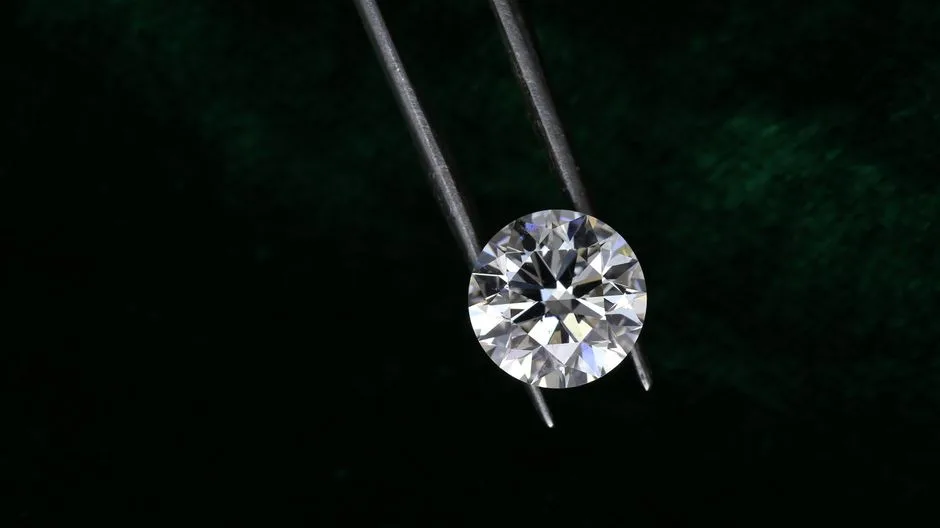
They remove the mining, not the diamond. Same carbon, same crystal structure, same hardness, same fire under a loupe — grown in a controlled environment instead of dug out of one. Producing a stone on a schedule costs less than finding one, which is why a lab grown diamond earrings price runs up to 60% below its mined twin.
The certificate does the trusting for you: carat, cut, colour and clarity on paper, verifiable against the lab's own database. We've written a full guide to what lab grown diamonds cost in India if you want the deeper version.
What the paper cannot do is describe the pair on an ear. Grades describe stones under magnification, and nobody wears magnification. Between two certified pairs a clarity grade apart, the certificate difference is usually invisible at earring distance — and the price difference is not. If the budget is fixed, that is the grade to give back.
Studs, hoops or clusters — which design costs what?
Same dials, different weightings.
Studs are stone-dominant: two stones, one small setting each, so the diamond stud earrings price is the cleanest to compare between sellers — almost all of it is the diamonds. Check the backs while you are at it: screw backs cost a little more than push backs and lose far fewer earrings.
Hoops are metal-dominant. The gold does the visual work and the stones are usually small, so the gold rate on the day moves the quote more than the stone grade does.
Clusters are the look-per-rupee play: many small stones reading as one large one. More setting labour, less rough-scarcity premium — which is why a cluster pair undercuts a solitaire pair of the same total weight.
Halos split the difference: one modest centre stone ringed by small ones that borrow its light. The pair reads a size bigger than the centre stones' paper weight — which is the point, and why halos price between clusters and solitaires.
None of these is the "right" choice. They are different answers to where you want the money to sit. A fair rule of thumb: for daily wear, spend on the metal and the fittings, because daily wear is hard on small claws. For occasion wear, spend on the stones — occasions are hard on nothing.
What about men's diamond earrings?
The men's diamond earrings price follows the same four dials. Our men's line — studs, rings, chains and bracelets — comes off the same bench as everything else, certified the same way, at the same factory-direct arithmetic.
The one practical difference: men's studs are often bought as singles, which halves the arithmetic and skips the matching premium entirely. Everything else on this page reads the same — per-stone weight, certificate, gold weight, route.
What to check before you pay
Five lines, any seller, any budget:
- Stone weight — total carat weight, and per-stone weight if it's a pair.
- The certificate — IGI, GIA or HRD, with a report number. Verify it on IGI's database yourself; it takes under a minute.
- Gold weight and karat — gold is priced at the day's rate, so ask which day's. And check the piece is BIS hallmarked, India's legal purity standard for gold.
- What the same spec costs elsewhere — one comparison quote, ten minutes.
- Who made it — if the seller can't answer, there is at least one margin in the price you cannot see.
For pairs, one more: ask whether the certificate covers each stone or the finished pair. Both are legitimate, but you should know which you are holding before you put it next to another quote. And if two quotes for the same spec still disagree after all five lines match, the remaining difference is route — the number of businesses between the bench and you.
We are members of the Bharat Diamond Bourse and the GJEPC, we ship pan-India, and visits in Mumbai are by appointment. Message us on WhatsApp with the spec you're considering — tell us what you're looking for — and we'll quote it against the certificate, honest numbers first. More guides live on the guides index.